- » All Antique Rugs
- » Antique Turkish Rugs (2)
-
»
Antique Persian Rugs
- » Bakhtiari Rugs (21)
- » Bibikabad Persian Carpets (10)
- » Bijar Antique Persian Carpets (15)
- » Dorokhsh Antique Rug (14)
- » Farahan Sarouk Rug (63)
- » Hamadan Persian Carpets (23)
- » Kashan Persian Rug (34)
- » Khorasan Antique Carpets (5)
- » Kurd Antique Tribal Rugs (35)
- » Mallayer Persian Rug (162)
- » Mashad Rugs (3)
- » North West Persian Antique Rug (11)
- » Persian Traditional Rugs
- » Ravar Kerman Antique Rugs (181)
- » Sarab Antique Rug (55)
- » Sarouk Antique Persian Rug (34)
- » Seneh (4)
- » Serapi Antique Rugs (50)
- » Sultanabad Antique Rug (102)
- » Tabriz Perisan Antique Rug (139)
- » Tehran (7)
- » Antique Khotan Rugs (314)
- » Antique Indian Rugs
- » Antique Chinese Rugs
- » Antique Russian and Caucasian
- » Antique European Rugs and Tapestries (1)
- » Semi-Antique Persian Rugs
- » Persian Tribal Rugs
- » Other Rugs
Ravar Kerman Antique Rugs
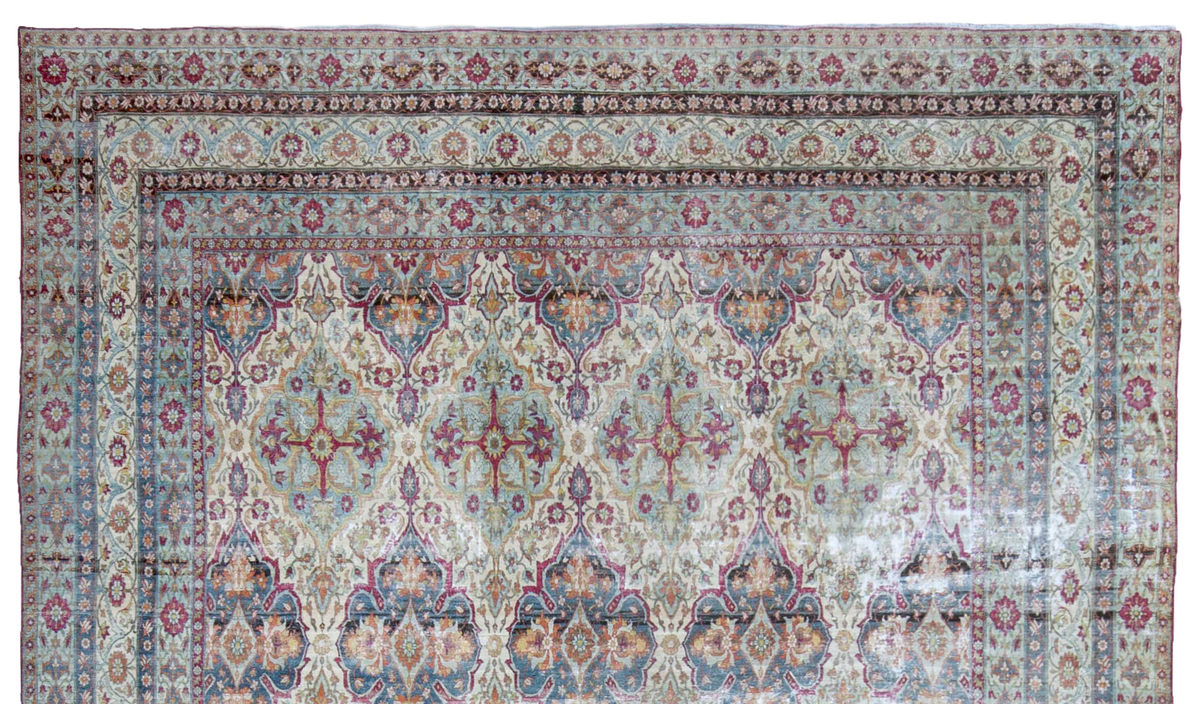
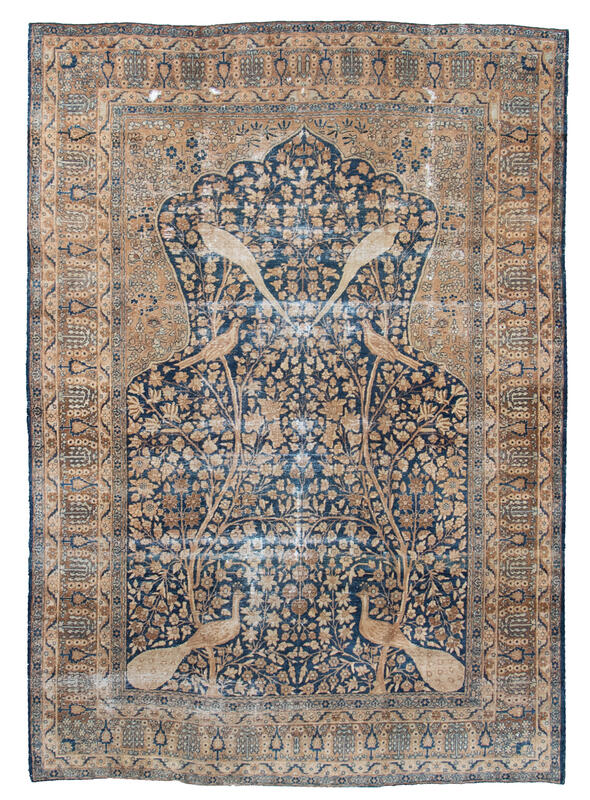
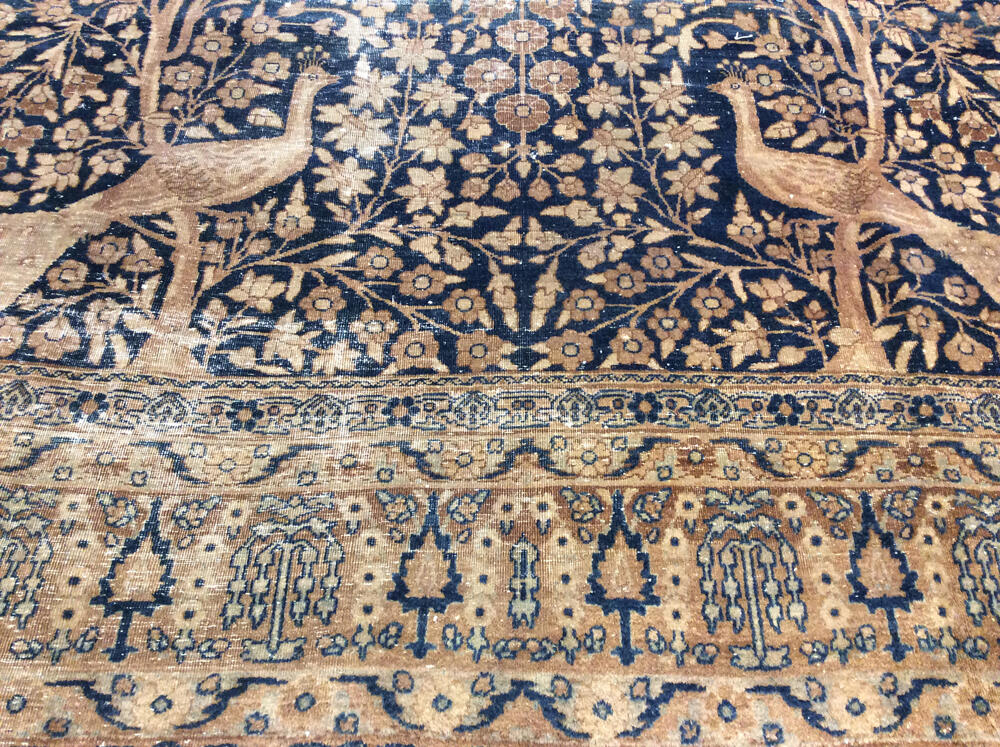
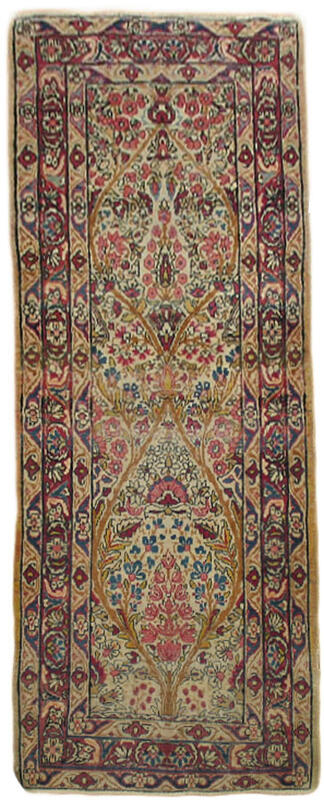
Ravar has long been the origin of some of the finest of Kerman products. The historical explanation appears to be that during the wars of the late 19th century much of Kerman was destroyed and a large part of the population, among them many carpet weavers, fled to Ravar. Although the weavings are characteristic of Kerman, the high quality rugs produced in Ravar soon gained recognition and the workshops founded their own tradition. Raver or Lavar as it is called in the West has had the reputation for the finest Kerman carpets. These so called Lavar Kerman may actually be made in a number of places in Kerman but the market calls them Lavar Kerman. Evidence shows that Laver Kerman rugs were also made in Rafsanjan and that the production of certain producers such as Atiyeh are sold as Lavar Kerman.